

FULL BEAM SKIN RESURFACING LASER PEEL
Full Beam Skin Resurfacing Laser Peel
Full-beam resurfacing vaporizes and shaves down layers of skin where applied. This effectively removes aged skin cells and induces skin rejuvenation. Full-field peels typically result in longer downtime but can generate impressive results in very few sessions.
Treats:
● Sun Damage
● Age Spots
● Deep Wrinkles
To achieve noticeable improvements, a personalized treatment plan consisting of 1 to 4 sessions is typically recommended.
HOW DOES A FULL BEAM SKIN RESURFACING PEEL WORK?
How It Works
Wavelength Absorption: The 2940 nm Er:YAG wavelength matches the peak absorption of water in human skin. When the laser hits the surface, the water inside the skin cells instantly absorbs the energy and vaporizes micro-thin layers of tissue.
Full-Field (Non-Fractionated) Coverage: Unlike fractional modes that treat only a matrix of tiny micro-channels while leaving surrounding tissue untouched, a full-beam (or full-field) peel removes 100% of the epidermal layer across the treated area for comprehensive surface resurfacing.
Hot vs. Cold Peel Settings:
Cold Peel: Vaporizes tissue precisely with minimal thermal diffusion (heat) to the lower dermis, focusing purely on micro-ablation and gentle texture smoothing with very quick healing.
Hot Peel: Delivers a controlled combination of ablation and thermal energy deeper into the tissue, which stimulates tighter collagen remodeling alongside surface renewal.
Collagen Stimulation and Healing: As the old, damaged surface layer is sloughed away, the body's natural healing response triggers fresh cellular regeneration and new collagen synthesis, resulting in smoother texture, refined pores, and reduced pigment irregularities.
HOW DO I PREPARE FOR A FULL-BEAM SKIN RESURFACING PEEL?
Preparing for a full-beam laser peel or surface-level laser treatment with the Fotona Laser System involves protecting your skin barrier and stopping active ingredients that can increase sensitivity.
2 to 4 Weeks Before Treatment
Avoid sun exposure: Stay out of direct sun, tanning beds, and self-tanners for at least 2 to 4 weeks. Tanned or sunburned skin raises the risk of burns, blisters, and dark spots (pigment changes). Wear SPF 30+ daily.
Pause deep exfoliation: Stop chemical peels, microdermabrasion, or aggressive facial scrubs 3 to 4 weeks prior.
Disclose medical history: Tell your provider if you have a history of cold sores (herpes simplex), as laser light can trigger an outbreak. They may prescribe a preventative oral antiviral medication (like Valtrex) to start before your appointment. Also inform them if you have ever used Accutane.
5 to 7 Days Before Treatment
Stop active skincare: Discontinue retinoids (Retin-A, retinol), AHAs, BHAs, glycolic or salicylic acids, and other strong exfoliating products.
Hold hair removal: Avoid waxing, threading, or chemical depilatory creams on the treatment area.
24 to 72 Hours Before Treatment
Check pain or blood-thinning medications: Ask your provider if you should avoid NSAIDs (like aspirin or ibuprofen) a few days prior, and use Tylenol if needed for comfort.
Stay hydrated: Drink plenty of water in the days leading up to your session to help your skin recover.
On the Day of Your Appointment
Arrive with a clean face: Do not wear makeup, lotions, perfumes, or heavy skincare products.
Arrive early if numbing is needed: Many offices ask you to arrive 30 to 60 minutes early so a topical anesthetic cream can be applied and take effect.
Dress comfortably: Wear loose clothing, especially if areas like the neck or chest are also being treated.
FAQ
IS A FULL-BEAM SKIN RESURFACING PEEL RIGHT FOR ME?
Who is a Good Candidate for a Full-Beam Fotona Peel?
Skin Concerns: Deep lines, pronounced photo-aging, significant surface scars, or severe uneven texture that lighter/non-ablative treatments cannot fix.
Downtime Availability: You can commit to 1 to 2 weeks of healing, peeling, erythema (redness), and strict sun avoidance.
General Health & Healing: You are in good health with no active skin infections, open wounds, or uncontrolled inflammatory conditions in the treatment area.
Skin Tone Considerations: Full-field ablative resurfacing removes the entire surface barrier, which carries a higher risk of pigment changes (hyperpigmentation or hypopigmentation) in darker skin types (Fitzpatrick types IV–VI), requiring an experienced provider to evaluate your individual safety margins.
When You Might Want to Consider an Alternative (or a Lighter Fotona Mode)
Minimal Downtime Needed: If you cannot afford days or weeks off work or social activities, fractional modes (like FRAC3 or SupErficial peels) or the multi-step Fotona 4D Treatment offer gradual collagen building with little to no downtime.
Active Skin Issues: If you have active, inflamed acne, an ongoing infection, or are currently/recently on certain oral retinoids, a full-beam ablative peel should generally be postponed.
Mild Aging or Maintenance: If you only have mild fine lines or early laxity, less invasive non-ablative or bulk-heating modes are usually a better fit.
HOW DO I TAKE CARE OF MY SKIN AFTER A FULL-BEAM SKIN RESURFACING PEEL?
Taking care of your skin after a full-beam or ablative/fractional laser peel with Fotona requires strict gentleness, moisture, and sun protection as your skin goes through controlled thermal regeneration.
Immediate Post-Treatment (Day of & First 24–48 Hours)
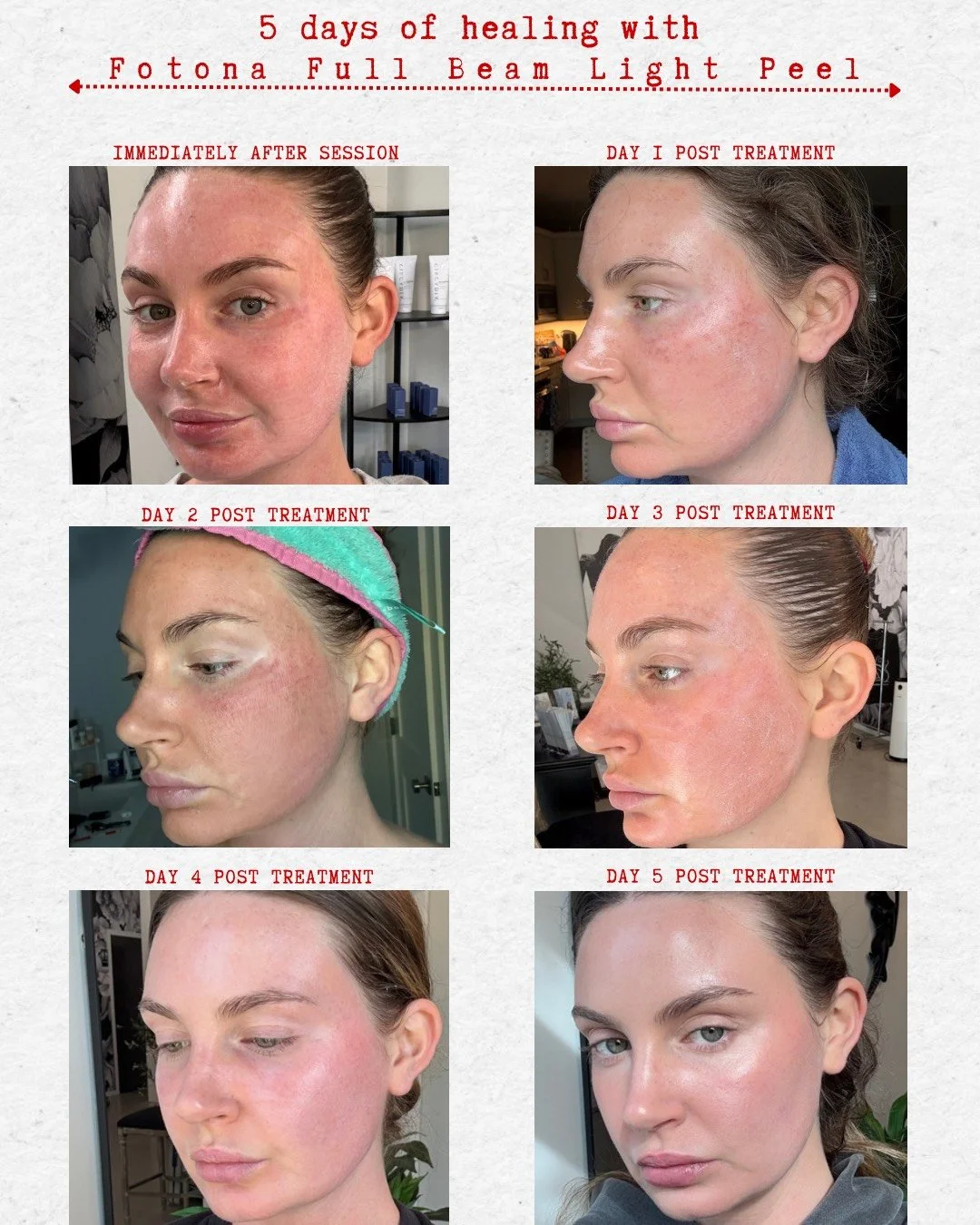
Manage Swelling and Heat: Redness, warmth, a sunburned sensation, and swelling (especially around the eyes) are normal and typically peak on the first or second morning. Use cold compresses or ice packs wrapped in a clean cloth for 10–20 minutes at a time. Sleep with your head elevated on an extra pillow the first night to minimize fluid retention.
Keep Skin Moisturized: Do not let your skin dry out. Apply the specific post-procedure healing balm, occlusive ointment, or peptide/growth-factor serum provided or recommended by your practitioner (such as Alastin Regenerating Skin Nectar, Cicalfate, Cicaplast, or Aquaphor) as directed.
Gentle Cleansing: Wait about 12 hours (or as instructed by your clinic) before washing your face. Use lukewarm water and a very mild, non-exfoliating cleanser. Pat dry gently with a clean towel; never rub or scrub.
Avoid Makeup and Heat: Do not apply makeup for at least 24 to 72 hours. Avoid hot showers, saunas, steam rooms, hot tubs, and intense workouts that cause heavy sweating for at least 48 hours (or longer for deeper treatments).
Days 2–5 (Peeling & Bronzed Texture)
Let It Peel Naturally: Your skin will start to look bronzed, darkened, or crusted, and will develop a dry, sandpaper-like texture before beginning to flake and peel. Do not pick, scratch, rub, or manually pull off the peeling skin, as this can lead to scarring or hyperpigmentation.
Transition Products Carefully: Continue using gentle, fragrance-free moisturizers (like Vanicream or Cetaphil) or your provider's recommended healing regimen until the raw or crusted stages subside.
Diet & Irritants: Avoid very spicy, acidic, or salty foods for the first 48–72 hours.
Days 6–14 and Beyond (Recovery & Protection)
Reintroduce Actives Slowly: Stay away from retinoids (Retin-A, retinol), glycolic acid, salicylic acid, vitamin C serums, scrubs, and mechanical exfoliants for at least 1 to 2 weeks, or until your provider confirms your skin barrier has completely healed.
Sun Protection is Mandatory: Your new, regenerating skin is extremely vulnerable to UV damage. Apply a broad-spectrum mineral sunscreen (SPF 30 or higher containing zinc oxide or titanium dioxide) every day—even if you are staying indoors near windows—and wear a wide-brimmed hat. Avoid direct sun exposure completely for at least 2 to 4 weeks.